Blog
Our blogs provide valuable insights and practical advice on topics related to child development, parenting, education, and pediatric healthcare. Written and reviewed by experienced professionals in child development, pediatric healthcare, education, and psychology, each blog offers evidence-based information and expert perspectives to support families and caregivers. Whether discussing developmental milestones, navigating educational challenges, or understanding healthcare needs, our blogs are designed to empower readers with knowledge that helps them better support the children in their lives.
Vision Is More Than 20/20: What Every Parent Should Know About Early Childhood Vision Development
Author: Melissa Amarnath, Founder & President
Category: Child Development / Early Intervention / Vision Support
As a vision specialist, One of the most common things I hear from parents is: “My child passed their vision screening, so their vision must be fine.” It’s a completely understandable assumption. After all, when most of us think about vision, we think about reading an eye chart or whether a child needs glasses.
But vision is so much more than 20/20 eyesight.
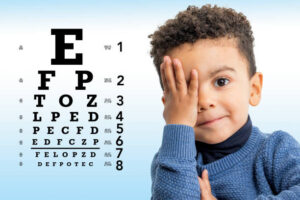
This can be especially confusing for families because a child’s eye exam may come back completely normal. Parents are often told, “Their eyes look healthy,” and that may be absolutely true. However, healthy eyes are only one piece of the puzzle. Some children have difficulty making sense of or using the visual information around them, even when their eyes are functioning normally. As a result, parents may continue to feel like something is “off” despite passing vision screenings or receiving a normal eye exam. That feeling is often what leads families to start asking questions and looking more closely at how their child is experiencing the world around them.
Vision plays a role in almost everything a child does. It helps them connect with the people they love, explore their environment, learn new skills, move safely through the world, and make sense of what they see every day. When most people think about vision, they think about reading an eye chart or whether a child needs glasses. While eyesight is important, it’s only one small piece of the puzzle.
Vision is actually a complex developmental process that influences how children learn, move, communicate, play, and interact with the world around them. During the first five years of life, a child’s visual system develops rapidly. Because of this, identifying visual challenges early can have a significant impact on a child’s overall development.
Vision Is More Than What the Eyes See
Vision isn’t just about seeing clearly. It’s about how children make sense of what they see and use that information to learn, move, play, and interact with the world around them. A child can have perfect 20/20 eyesight and still struggle with important skills that affect everyday life. That’s because eyesight tells us how clearly a child sees, while vision involves how they understand and use the information their eyes send to the brain. These skills include things like making eye contact, tracking moving objects, using both eyes together, judging distances, coordinating movement, paying attention to visual information, and making sense of the world around them. Many of these challenges are not detected during a routine vision screening or standard eye exam because the eyes themselves may be healthy. The challenge often lies in how children use and interpret visual information throughout their daily lives.

Why Vision Matters for Development
More than 80% of what young children learn comes through visual experiences. From the moment they are born, babies use vision to recognize caregivers, explore their environment, reach for toys, and begin making sense of the world around them. As they grow, vision becomes deeply connected to nearly every area of development.
- Social Development: Children use vision to read facial expressions, observe social interactions, follow gestures, and engage with peers during play. These visual experiences help children build relationships, understand emotions, and learn important social skills.
- Communication and Language: Vision helps children learn by watching faces, mouth movements, body language, and interactions with others. This can be especially important for children with speech delays or limited verbal communication. Through observation, children learn how conversations work, how emotions are expressed, and how to connect with the people around them.
- Motor Development, Spatial Awareness, and Body Awareness: I often tell families that vision and movement go hand in hand, as children rely on visual information to understand their position relative to people, objects, and their surroundings. This spatial awareness builds the confidence, balance, and body coordination necessary to reach critical gross motor milestones—like crawling, walking, and climbing—whereas visual inefficiencies can lead to clumsiness, movement avoidance, or motor delays. Furthermore, strong visual skills drive hand-eye coordination by guiding the hands during daily fine motor activities, allowing children to accurately and efficiently interact with their environment when reaching for toys, stacking blocks, using utensils, and eventually learning to write.
- Cognitive Development, Learning, and Problem Solving: Vision is a powerful tool for learning. Children rely on visual information to explore their environment, make connections, recognize patterns, and solve problems. As they grow, vision supports attention, visual memory, cause-and-effect learning, matching and sorting skills, and the ability to understand and organize information. These visual-cognitive skills become increasingly important as children prepare for school. Recognizing shapes, letters, and numbers, following visual demonstrations, completing multi-step activities, and developing early literacy skills all depend on a strong visual foundation. When visual challenges are present, learning may become more difficult even when a child’s eyesight appears normal
Signs a Child May Need Additional Visual Support
Vision concerns are not always obvious. Many young children assume everyone sees the world the same way they do, so they may never tell adults something feels different. Instead of telling us there is a problem, children often show us through their behavior.
Some signs I encourage families to watch for include:
- Difficulty tracking moving objects
- Frequently bumping into things
- Tilting or turning the head when looking at objects
- Light sensitivity
- Difficulty finding items in a busy environment
- Balance difficulties or frequent falls
- Delays in motor, learning, or developmental skills
Children with developmental delays, prematurity, autism spectrum disorder, hearing impairments, neurological diagnoses, or genetic conditions may be at an even greater risk for vision-related challenges.
Don’t Wait for School Screenings
One of the biggest myths I encounter is that children don’t need an eye exam until they start school. In reality, children can have their first comprehensive eye exam as early as six months of age. An infant eye exam allows eye care professionals to evaluate eye health, monitor visual development, assess tracking skills, and determine how well the eyes are working together—all without a child needing to identify letters or speak. Early identification allows families to address concerns before they begin affecting development, learning, and daily routines.
What Is Early Vision Intervention?
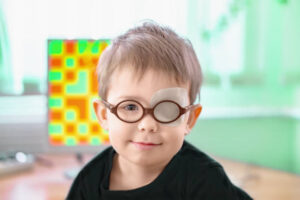
One of the things I love most about my work is helping families understand how their child experiences and interacts with the world around them. Every child experiences and interacts with the world differently. Some children may have difficulty using and understanding the visual information around them. Others may have low vision, cortical visual impairment (CVI), or blindness. Regardless of the diagnosis, the goal of early vision intervention is to help each child develop the skills they need to learn, communicate, move safely, and participate fully in everyday life.
My approach is shaped by years of experience as a Head Vision Therapist, Certified Early Intervention Vision Specialist, Infant and Toddler Vision Screener, and Cortical Visual Impairment (CVI) Specialist. Because vision affects every area of development, I work closely with families and other professionals, including occupational therapists, physical therapists, speech-language pathologists, educators, and medical providers, to create strategies that support the whole child.
For children with usable vision, intervention often focuses on helping them use their vision more effectively during play, movement, communication, learning, and daily routines. For children with visual impairments or blindness, intervention focuses on building the foundational skills needed to understand and navigate the world using all available sensory information. Early vision intervention may include assessing how a child uses vision during daily activities, adapting environments and routines, strengthening visual skills, supporting movement and learning, and teaching families practical strategies they can use throughout the day.
For children who are blind or have significant visual impairments, early intervention is about much more than teaching compensatory skills. It is about helping them build a foundation for learning. Through meaningful experiences, hands-on exploration, auditory cues, and consistent routines, children learn how to gather information from their environment, understand cause and effect, develop spatial concepts, communicate effectively, and become confident explorers of the world around them.
The goal is not simply better eyesight. The goal is helping every child access, understand, and interact with their environment in the most effective way possible. Whether a child is learning to use their remaining vision more efficiently or learning to gather information through touch, sound, movement, and other senses, early intervention helps create the foundation for future independence, learning, and participation. The early years are a period of incredible brain growth and development. When visual concerns are identified and addressed early, children have greater opportunities to build strong developmental foundations, gain independence, strengthen communication and learning skills, and successfully engage in everyday activities. Small changes made during these early years can have a lasting impact on a child’s future and help them reach their fullest potential.

Every Child Deserves the Opportunity to Thrive
Sometimes the first sign that a child may need additional support isn’t a diagnosis, a failed screening, or a missed milestone. It’s a parent noticing small things that don’t quite add up—a child who seems unusually cautious, frequently bumps into things, struggles with balance, avoids eye contact, or becomes frustrated during activities that seem easy for other children. You may not know exactly what you’re seeing, and that’s okay. As parents, caregivers, and professionals, we don’t need to have all the answers before we begin asking questions. In fact, some of the most meaningful conversations start with a simple observation: “I wonder if there might be more going on.” Vision is one of the primary ways children gather information about the world around them. When visual challenges go unnoticed, children may have to work harder to learn, move, communicate, and participate in everyday activities.
Identifying concerns early gives us the opportunity to better understand how a child experiences their environment and provide support that helps them thrive. Whether a child has a visual processing challenge, low vision, blindness, cortical visual impairment (CVI), or simply needs additional support developing functional visual skills, early intervention can make a meaningful difference. By building on a child’s strengths and providing individualized strategies, we can help them better understand their world, develop confidence, increase independence, and participate more fully in daily life.
At Community Pathways for Kids, we believe every child deserves the opportunity to thrive. We also believe that families should never have to navigate concerns alone. Through education, guidance, resources, and support, we help families better understand their child’s development and connect with the services that can make a difference.
Let's Connect!
Have you noticed your child tilting their head, struggling with balance, or avoiding eye contact? Have they had an eye exam yet? Let’s talk about it! Reach out to us directly by filling out the referral form to see how we can support your family's visual journey!